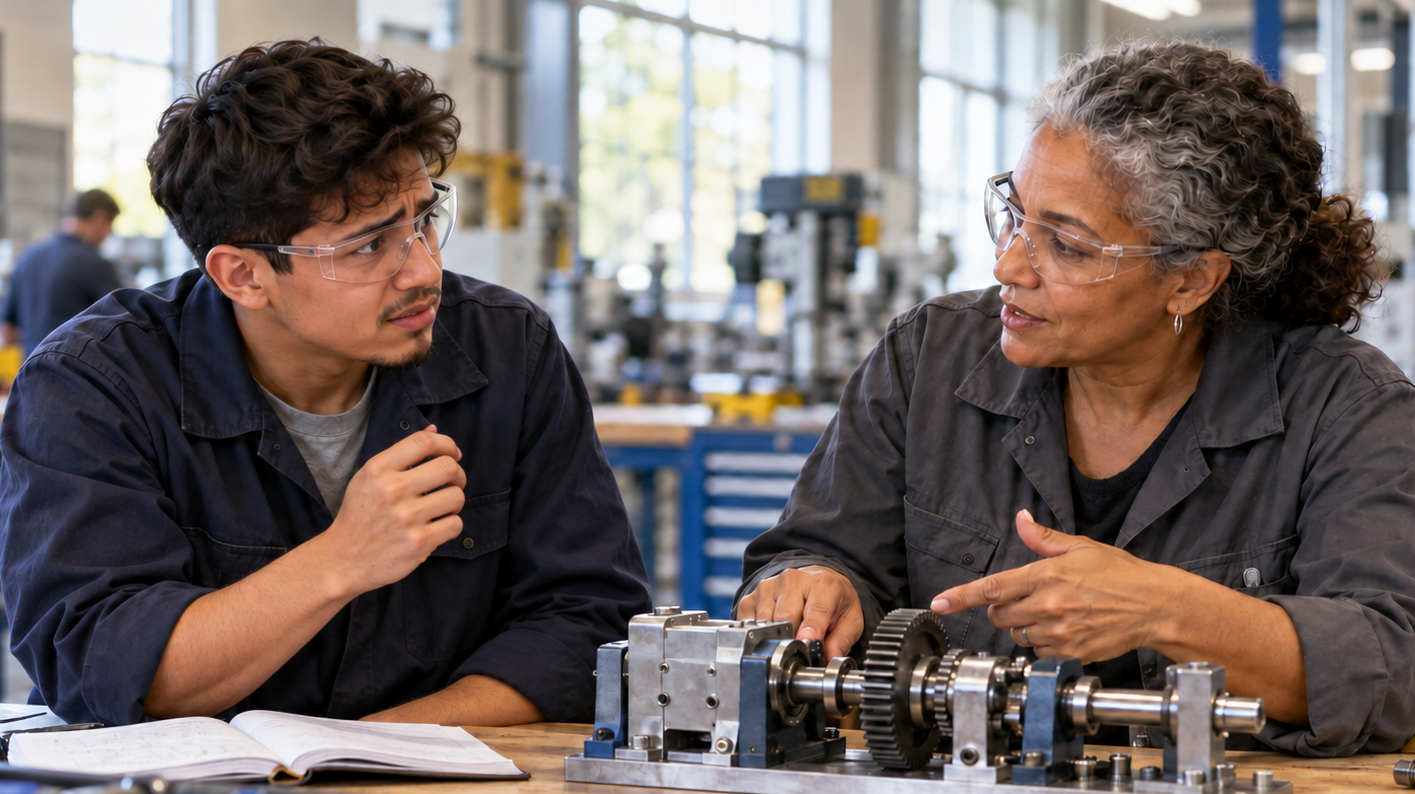
An apprentice watches a mentor complete a task. The steps look straightforward until it is time to try. One detail is unclear, but the apprentice hesitates to ask. Will another question make them seem unprepared? That moment matters.
A conversation could clarify the task, reveal a misunderstanding, and build confidence. Silence leaves uncertainty unresolved. Apprenticeships connect learning with earning. Their daily value also depends on how people learn from one another. For workforce boards, employers, and training partners, strengthening these interactions is a practical way to support apprenticeship success.
Social learning happens when people observe others, exchange ideas, ask questions, practice together, and reflect on feedback. Apprenticeships provide opportunities for all five. Yet working alongside an expert does not guarantee that an apprentice understands the expert’s thinking. An experienced technician may recognize a warning sign without mentioning it. A supervisor may change priorities without explaining the decision.
Mentors can make their reasoning visible: “I checked this first because…” or “Here is what made me choose this approach.” Invite apprentices to explain their thinking too. “Talk me through what you would do next” reveals more than “Does that make sense?” The answer helps mentors see where further explanation or practice is needed.
Asking for help requires communication skills and confidence. Apprentices may worry about slowing the team down or appearing incapable, particularly during their first weeks. Mentors can make questions an expected part of learning. Ask, “Which step should we go through again?” Allow time for an answer. Respond respectfully when someone raises a concern.
Apprentices also need practice asking useful questions. “I understand how to complete the task, but how do I check that the result is correct?” gives a mentor something specific to address. These exchanges build habits that matter beyond a single task: listening carefully, acknowledging uncertainty, and seeking guidance before proceeding.
Fellow apprentices can be valuable learning partners. Comparing experiences helps people discover different approaches and recognize questions they had not considered. A workforce team could bring apprentices together to discuss a challenge from the week. Each person explains what happened, what they tried, and what they would do differently.
Keep the discussion focused on learning. Encourage participants to ask clarifying questions before offering advice. Remind them to check technical guidance with their mentor or instructor. Collaboration then becomes an opportunity to practice communication while making sense of workplace experience.
Feedback works best when the apprentice understands what happened and what to practice next. “Be more professional” offers little direction. “When the assignment changed, your teammate did not receive an update. How could you keep them informed next time?” identifies a specific behavior and invites reflection. Ask for the apprentice’s perspective.
Agree on one action, then revisit it after they have had a chance to practice. Workforce coaches can reinforce this process by helping apprentices prepare for feedback conversations and reflect afterward. A brief discussion can turn an uncomfortable experience into a useful development opportunity.
The Foundation for Talent Transformation’s psychometric assessments, online courses, and AI coaches can help apprentices develop the skills these conversations require. Assessments encourage reflection on communication styles, emotional intelligence, and responses to conflict.
Online courses introduce practical approaches to listening, teamwork, and workplace challenges. AI coaches provide opportunities to prepare questions, consider feedback, and think through a conversation before speaking with a mentor. Connect these resources to a real situation. Choose one skill, practice it during the apprenticeship, and discuss what happened with a coach or supervisor.
Workforce partners can encourage employers to build questions, explanations, and reflection into everyday apprenticeship activities. Ask mentors and apprentices what helps them learn together and where communication breaks down. Every demonstration, shared task, and feedback discussion offers an opening. Making those conversations count helps apprentices understand the work, contribute to their teams, and prepare for greater responsibility.