The Workforce Pell program is a major federal expansion of Pell Grant eligibility, allowing students to use federal aid for short-term, for-credit programs lasting 150–599 hours (about 8–15 weeks). These programs aim to help adults and career changers gain fast, affordable pathways into high-demand careers.
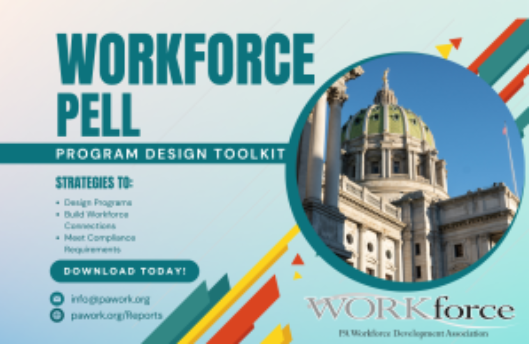
To help institutions and workforce leaders prepare, the Pennsylvania Workforce Development Association (PWDA) has created a Workforce Pell Toolkit. This practical guide explains how the new program works, what’s required for eligibility, and how to plan for implementation once federal regulations are finalized.
What’s in the Toolkit
The Toolkit breaks down key program requirements, including:
- Programs must be for-credit, stackable, and tied to in-demand jobs
- They must achieve at least 70% completion and 70% job placement within 180 days
- Graduate earnings must exceed program costs
- Programs must be operational for one year before applying
It also includes a readiness assessment to help colleges and partners evaluate their current capacity, with areas of impact including employer engagement, data tracking, outcomes reporting, and identify next steps to meet Workforce Pell standards.
Why It Matters for Workforce Boards
Although funding will go to post-secondary institutions, workforce boards play a critical role in ensuring program success. The Toolkit helps boards understand how Workforce Pell intersects with regional strategies, economic development, and employer engagement.
Workforce boards can use it to:
- Share labor market data to guide program design
- Connect institutions with employers and sector partnerships
- Ensure alignment with local and state plans
- Support equity and access by connecting job seekers to new short-term programs
By working together early, colleges and workforce boards can ensure Workforce Pell-funded programs are both compliant and impactful.
Looking Ahead
The U.S. Department of Education is expected to release final Workforce Pell guidance in 2026. PWDA’s Toolkit will be updated as details emerge, providing a reliable reference point for planning and collaboration.
The Toolkit is available free of charge at www.pawork.org. It offers a shared roadmap for workforce and education leaders preparing to make short-term training a stronger bridge between learning and work.
Bio
Dr. Lauren Holubec serves as Executive Director of the Pennsylvania Workforce Development Association, advancing workforce policy, partnerships, and professional development that align education and industry to strengthen Pennsylvania’s talent pipeline.
https://www.pawork.org/workforce-pell-program-design-toolkit/