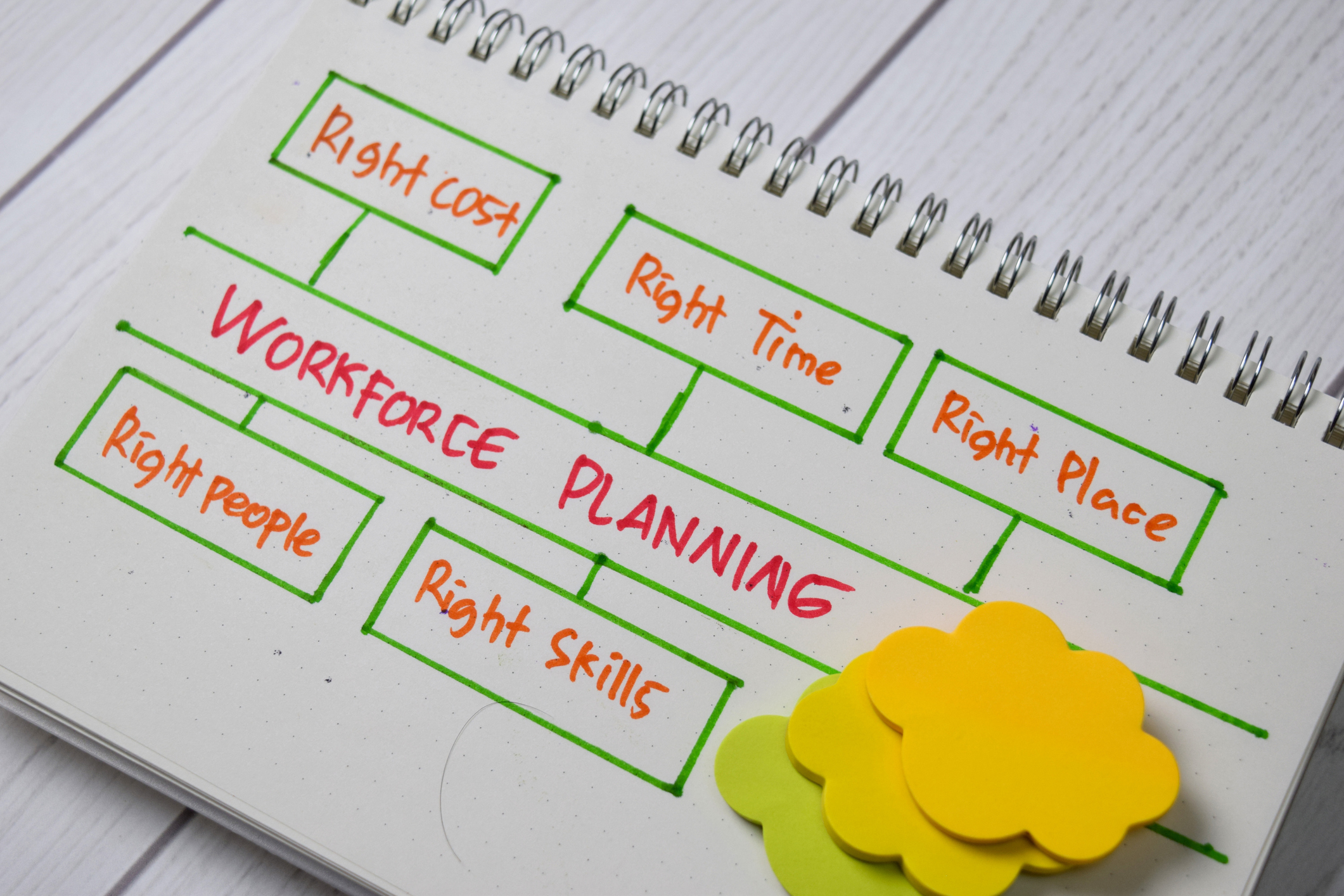
Skills Gap – The documented difference between what employees currently possess in terms of their knowledge, abilities, and characteristics and what is required to meet immediate and forecasted work expectations (Jacobs, 2019).
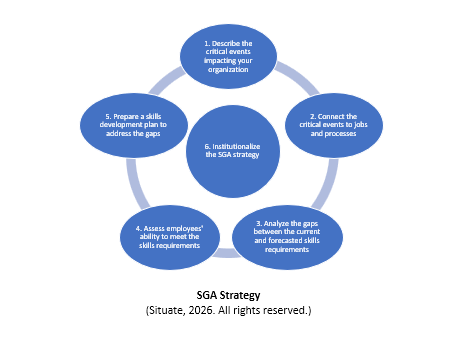
Skills-Gap Analysis – The process of identifying the critical events impacting the organization, linking the jobs, roles, and processes impacted with the critical events, documenting immediate and forecasted skills gaps, and planning to address the gaps.
Skills-Gap Analysis (SGA) Strategy
Responding to today’s volatility in the workplace requires more than compiling survey data across business sectors, for instance, and expressing words of concern alone. Managers know firsthand that a skills-gap problem exists and really don’t require additional information, however compelling, to convince them of its importance. Many managers have experienced the scenario, for instance, of seeing new equipment brought in or software programs being installed on a Friday, with senior management expecting that these investments will be ready for use on the following Monday morning.
Unless the changes were anticipated and employee training plans in place and implemented beforehand, there’s limited reason to expect that production or service delivery on Monday morning will occur without major interruptions. That’s why having the tools for taking action now has become a critical concern.
The SGA Strategy is based on extensive academic research and change management consulting experience, and designed to meet the following considerations:
- Intended for use by individuals leading the transition to a skills-based perspective
- Responsive to the organization’s mission, culture, and impending critical events
- Responsive to the development needs of employees
- Targets strategic parts of the organization first, for the greatest impact
- Used on a regular basis, not as a one-time event, ensuring long-term acceptance
- Can be managed by a digital platform to support the Strategy
- Focuses on achieving both business and employee development outcomes
- Integrates proven research on training effectiveness and organizational change (Jacobs, 2003).
The SGA Strategy has six phases, each having goals, associated practices, and expected outcomes. The sixth phase is done along with the other phases, ensuring the long-term acceptance among those involved in the change process. Managers know, often from firsthand experience, the importance of having such a change management component (Jacobs, 2002). Recent reports about the rate of failure of AI projects attest to the need for a sound implementation approach.
References
Jacobs, R. (2019). Work analysis in the knowledge economy: Documenting what people do in the workplace for human resource development. Palgrave Macmillan. https://link.springer.com/book/10.1007/978-3-319-94448-7
Jacobs, R. (2002). Institutionalizing organizational change through cascade training. Journal of European Industrial Training. 26(2), 177-182.
Jacobs, R. (2003). Structured on-the-job training: Unleashing employee expertise in the workplace. Berrett-Koehler Publishers https://bkconnection.com/products/9781576752425_structured-on-the-job-training?_pos=2&_sid=cc52c76cd&_ss=r
Jacobs, R., & Boulay, D. (February 2021). Moving Beyond the Conceptual: Findings of the Skills Gap Analysis Project to Forecast Changes in the Nature of Work. Presented at the Academy of Human Resource Development annual conference. Paper available from the author.
Osman-Gani, A., & Jacobs, R. (2005). Technological changes and human resource development practices in Asia: A study of Singapore-based companies. International Journal of Training and Development. 9(4), 271 – 280.