Workforce Development Month is a time to celebrate the people, partnerships and programs that connect individuals to opportunity and employers to talent. But this year, it may also be a good time to remember something else: the public workforce system has been adapting to change for a very long time.
In fact, change may be one of the few constants in our history.
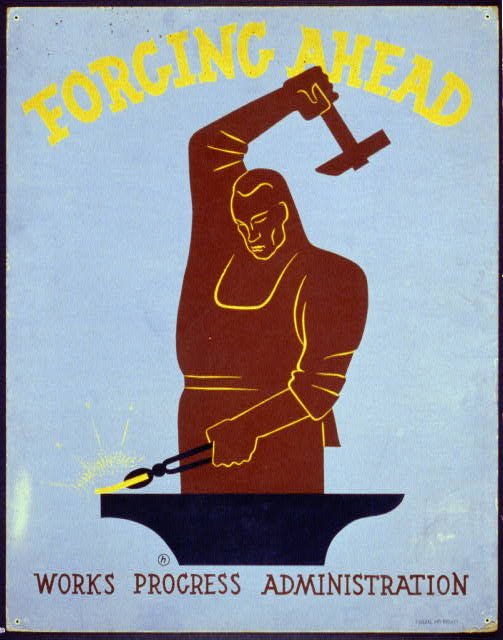
The roots of today's public workforce system stretch back more than 90 years. In 1933, during the Great Depression, the Wagner-Peyser Act established a nationwide system of public employment offices to connect people looking for work with employers looking for workers.
Think about how much has changed since then. The economy, technology, industries, and even the meaning of work have transformed dramatically. Legislation and programs have evolved from earlier employment and training programs to the Workforce Investment Act and today's Workforce Innovation and Opportunity Act.
Yet the fundamental mission remains remarkably familiar: help people find opportunities, help employers find talent, and help communities respond to economic change.
Along the way, the public workforce system has weathered recessions and recoveries, factory closures, globalization, automation, natural disasters, and a global pandemic. Entire occupations have disappeared while new ones have emerged.
And still, the system has endured. Resilience Is Part of Our DNA That history matters today.
Once again, workforce professionals are operating in a period of extraordinary change. Artificial intelligence is transforming occupations and skill requirements. Employers are rethinking how they find and develop talent. Apprenticeships, work-based learning, and new credentialing models are challenging traditional approaches. Federal policies and funding priorities continue to evolve.
History gives us reason not to fear that change. We have reinvented ourselves before. We can do it again
But resilience can no longer mean simply surviving until things "get back to normal." There may not be a permanent normal to return to. Our future requires us to be nimble, listening closely to our communities, anticipating change, building new partnerships, testing new approaches and adjusting when yesterday's solution no longer fits tomorrow's problem.
Perhaps we need to ask not only, "What are we required to do?" but also, "What does our community need us to do?"
The System Is More Than Its Legislation There is another lesson in our history worth remembering. Programs have changed. Legislation has changed. Performance measures, funding priorities, and technology have changed. But the public workforce system is more than any one piece of legislation.
It is people. It is the career coach helping someone see hope again. It is the business services professional listening to an employer struggling to find talent. It is the workforce board bringing partners together around a challenge no organization can solve alone. It is local leaders asking, "What does our community need, and how can we help?"
That is the public workforce system. And perhaps that is why it has lasted.
More than nine decades after Wagner-Peyser, we are still connecting people with opportunity. The tools are different. The economy is different. The challenges are different. The mission endures. So, this Workforce Development Month, let's celebrate not only what the public workforce system has accomplished, but what it has repeatedly demonstrated it can become.
We are resilient. We are adaptable. We are problem-solvers.
Another transformation of workforce development isn't coming; it is already underway. The question is whether we will resist it, react to it, or help lead it. Our history tells us we are capable of and absolutely should be leading it.