Workforce leaders rely on data every day. Labor market information shows where jobs are growing. Performance reports show who completed training, earned credentials, secured employment, and increased earnings. These measures are essential, but they do not tell the whole story. For Workforce Development Boards and their partners to understand what truly helps people succeed, they must also pay closer attention to employability skills.
Employability skills help people get hired, stay employed, work effectively with others, and advance. They include communication, teamwork, professionalism, emotional intelligence, critical thinking, problem solving, adaptability, resilience, and self-awareness. These skills are often called soft skills, but there is nothing soft about their impact. They shape whether someone can accept feedback, manage conflict, collaborate, communicate with customers, show initiative, and stay steady when work becomes difficult.
Employers Are Sending a Clear Signal
Career Readiness Requires More Than Technical Skills
The demand for these skills is clear. The National Association of Colleges and Employers reported in its 2026 Job Outlook Spring Update that employers view communication, teamwork, professionalism, and critical thinking as among the most important career readiness skills for new hires.
https://www.naceweb.org/research/reports/2026/job-outlook/spring-update/
NACE defines career readiness through competencies that include communication, critical thinking, professionalism, teamwork, leadership, technology, equity and inclusion, and career and self-development. These competencies reinforce a key point: career readiness is not only about technical capability. It is also about how people show up, solve problems, learn, and contribute.
https://www.naceweb.org/career-readiness/competencies/career-readiness-defined
Future Jobs Will Demand Human Adaptability
The World Economic Forum’s Future of Jobs Report 2025 found that employers expect many workers’ core skills to change by 2030. As artificial intelligence and automation reshape work, employers are placing greater value on analytical thinking, creative thinking, resilience, flexibility, leadership, curiosity, and lifelong learning. These skills help workers adapt when tasks change, technology is introduced, and jobs require more judgment and collaboration.
https://www.weforum.org/publications/the-future-of-jobs-report-2025/
Work Readiness Applies Across Every Sector
The U.S. Department of Labor has long emphasized these capabilities. Its Office of Disability Employment Policy identifies professionalism, work ethic, communication, teamwork, collaboration, critical thinking, and problem solving as central to work readiness. These skills matter in construction, manufacturing, logistics, transportation, energy, health care, hospitality, office roles, and skilled trades.
https://www.dol.gov/agencies/odep/publications/fact-sheets/soft-skills-the-competitive-edge
Durable Skills Are Visible in Employer Demand
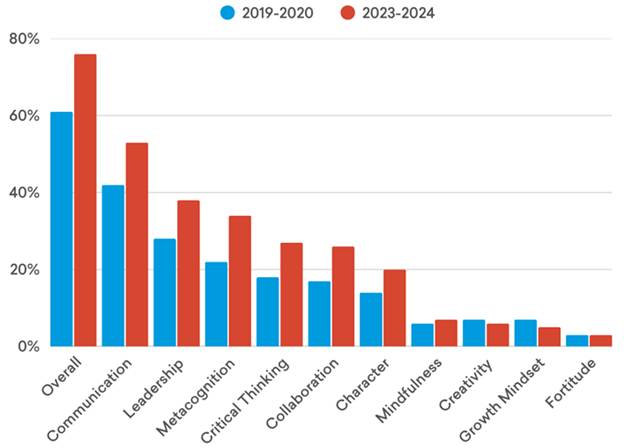
Research from Lightcast and America Succeeds demonstrates that durable skills are strongly represented in employer demand. Their analysis of job postings shows that employers ask for communication, collaboration, critical thinking, leadership, and other durable skills that help people perform effectively across roles and industries.
% of Job Postings Requesting 1+ Durable Skills In Each Competency
https://lightcast.io/resources/blog/growing-demand-for-durable-skills
Human Skills Matter in Every Industry
This point is becoming more important as AI and automation take over repetitive work. When machines perform routine tasks, human value shows up in judgment, communication, troubleshooting, safety awareness, teamwork, and learning. A technician may need to explain a problem clearly. A construction worker may need to coordinate safely with a crew. A manufacturing employee may need to communicate a process issue before it becomes costly. These moments require listening, emotional intelligence, and trust.
https://pmc.ncbi.nlm.nih.gov/articles/PMC10428053/
An Opportunity for Workforce Development Boards
For Workforce Development Boards, this creates an important opportunity. Employability skills should be treated as measurable readiness indicators. Just as workforce systems track credentials, placements, wages, and retention, they can also track growth in communication, confidence, adaptability, problem solving, and professionalism.
Combined data points create a richer picture of workforce impact. Someone who improves communication may interview more effectively. Someone who builds emotional awareness may handle workplace stress better. A worker who strengthens resilience may stay engaged after setbacks. A job seeker who develops self-awareness may choose a pathway that fits their interests, values, and strengths.
Making Employability Skills Visible
This connects directly to the mission of the Foundation for Talent Transformation. FTT helps individuals build self-awareness, emotional intelligence, communication, resilience, confidence, and other life skills that support personal and professional success. By helping people understand and develop these capabilities, FTT supports workforce partners in making human growth more visible, actionable, and connected to long-term employment outcomes.
Takeaway
Employability skills are central to workforce development. Technical skills may help people qualify for opportunities, but employability skills help them succeed once they arrive. Communication, professionalism, emotional intelligence, adaptability, and resilience influence whether individuals complete training, interview well, accept feedback, contribute on the job, remain employed, and advance. By making these skills visible and measurable, workforce systems can better understand participant progress, employer needs, and long-term impact. Employability skills are workforce data because they reveal the human capabilities that turn opportunity into sustained success.