Across the workforce development field, there is a growing emphasis on skills—how they are defined, developed, and aligned with employer demand. This shift is both necessary and timely. As industries evolve, workforce systems are being asked to move faster, respond more precisely, and create clearer pathways to economic mobility.
Yet, in the midst of this shift, a persistent challenge remains.
Many workforce systems are designed to track services delivered and outcomes achieved, but often struggle to clearly connect the two. We can report how many individuals completed training, attended workshops, or secured employment. We can also report wage gains or credential attainment. But we are not always able to answer a more fundamental question:
What actually led to that outcome—and how did skills development intersect with the barriers individuals were facing?
This gap matters, especially in a skills-based economy.
If we are serious about aligning talent development with real-time employer demand, we must also be serious about understanding the full context in which individuals are building those skills. Skills do not develop in isolation. They are shaped by a range of factors, including access to transportation, housing stability, financial pressure, childcare responsibilities, and mental well-being.
In practice, this means that two individuals entering the same training program may have very different experiences and outcomes—not because of their ability to learn, but because of the conditions surrounding their participation.
To address this, workforce systems may need to think differently about how we design and measure our work.
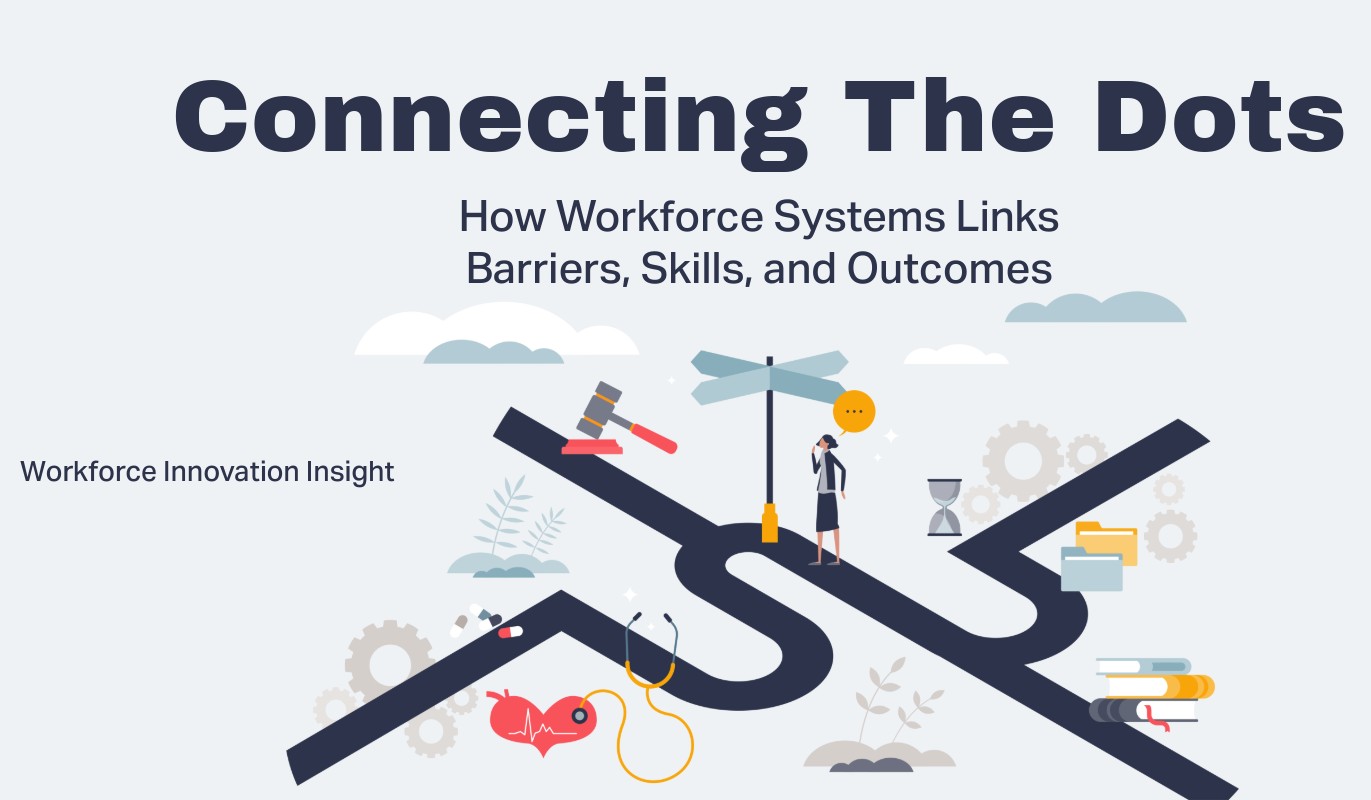
One emerging approach is to more intentionally connect three elements that are often managed separately: barriers, services, and outcomes.
First, systems can benefit from a structured way to understand participant barriers at the outset. Tools like the Arizona Self-Sufficiency Matrix provide a way to capture multiple dimensions of stability—not just employment status, but the broader conditions that influence a person’s ability to engage in training and work.
Second, services—including skills-based training, work-based learning, and supportive services—can be more explicitly aligned to those identified barriers. This is where innovation in program design becomes critical. Skills development should not be viewed as a standalone activity, but as part of a coordinated strategy that addresses both capability and access.
Third, outcomes can be measured using standardized frameworks such as Results-Oriented Management and Accountability (ROMA), which provide a common language for reporting progress in areas like employment, income growth, and retention.
Individually, each of these components is valuable. Together, they create something more powerful: a clear line of sight between where someone starts, what support they receive, and what outcomes they achieve.
This kind of connected system offers several advantages.
It allows workforce organizations to better understand which combinations of services are most effective for different populations. It supports more targeted decision-making, helping leaders allocate resources where they can have the greatest impact. And it strengthens the ability to communicate value—to funders, partners, and policymakers—by showing not just what was done, but what changed and why.
Importantly, this approach also aligns with the broader direction of the field. As workforce systems move toward skills-based strategies, employer engagement, and integrated service delivery, the need for clearer, more connected measurement becomes even more critical.
Linking barriers, skills development, and outcomes is not about adding complexity for its own sake. It is about bringing coherence to the work that is already happening across programs, partners, and systems.
For workforce leaders, the opportunity is to move beyond fragmented measurement toward a more unified approach—one that reflects the realities participants face, the services we deliver, and the outcomes we aim to achieve.
In doing so, we can build systems that are not only more responsive to a changing economy, but also more effective in supporting long-term economic mobility for the individuals and communities we serve.