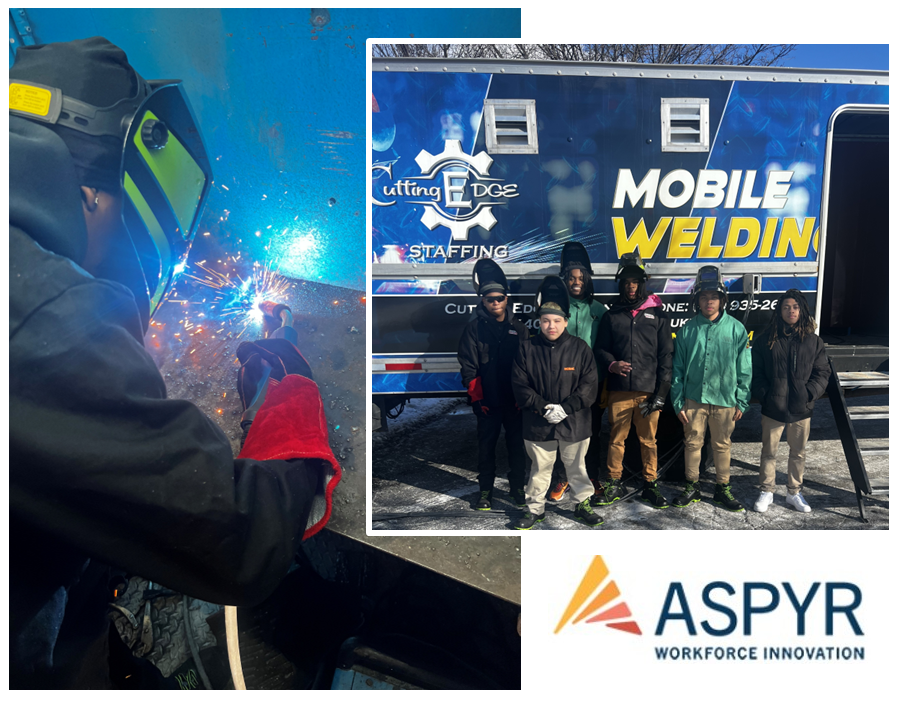
Access can be one of the biggest barriers between a jobseeker and a high-quality training opportunity. Transportation challenges, longcommutes, and rigid schedules often stand in the way—even when strong programsexist. A recent Accelerated Welding cohort offered through Cutting Edge takes adifferent approach: instead of requiring students to come to the training, thetraining comes to them.
Cutting Edge, a post-secondary education providerspecializing in skilled trades, is doing exactly what its namesuggests—redefining how and where workforce training happens. Through a mobilewelding lab, the organization can deliver hands-on, industry-recognizedtraining directly to students in locations that are convenient, accessible, andconnected to local workforce hubs.
“We can bring it to you versus you coming to us,” saidAndrea Bester, owner of Cutting Edge. That flexibility, she noted, isespecially impactful for schools, workforce centers, and rural communitieswhere traditional training facilities may be out of reach.
A Welding Lab on Wheels
At the center of the program is a mobile welding truckequipped with six individual welding booths. Inside, students complete thehands-on portion of a six-week accelerated welding program that blendsclassroom instruction with real-world application.
According to Raheem Collis, Welding Instructor and Directorfor Cutting Edge, the program is designed to move quickly while maintaininghigh standards. The first half focuses on coursework and safety—students mustearn a perfect score on the safety module—before transitioning into hands-onwelding practice.
By the end of the program, students can earn certificationsin shielded metal arc welding, gas metal arc welding, gas tungsten arc welding,and flux core arc welding—credentials that open doors across manufacturing andconstruction industries.
Reducing Barriers, Expanding Access
For OhioMeansJobs staff working directly with job seekers,Cutting Edge’s mobile model stood out immediately.
“I think it’s more that they come to you—where you don’thave to go to them,” said Camille Daniels, Talent Development Specialist,Special Projects. She emphasized how location and convenience can make thedifference between someone enrolling or opting out altogether.
Rather than asking students to navigate traffic or longcross-town commutes, the program was hosted in a central, transit-accessiblelocation—making it easier for participants to stay engaged and on track.
That accessibility also aligns with recruitment efforts.OhioMeansJobs staff shared that participants learned about the program throughsocial media, referrals from talent development specialists, and directoutreach to job seekers who showed interest in trades training.
From Interest to Opportunity
For student Tim Lamoreaux, the mobile welding programconnected his interest in welding with a clear and practical next step. Afterseeing a post on LinkedIn while searching for welding jobs, he enrolled in theaccelerated program to build skills that align with what he enjoys—and thatemployers need.
“It’s been convenient so far,” Tim shared, noting thataccessibility played a key role in his experience. Like many students, he wasespecially eager to move into the hands-on portion of the training.
Building Community Connections
Beyond the program structure itself, Cutting Edge emphasizeda long-term commitment to the communities it serves. According to Bester, thegoal is not just to deliver training and leave, but to build lastingrelationships with local partners, schools, and workforce organizations.
As workforce systems continue to look for innovative ways toconnect job seekers with in-demand skills, Cutting Edge’s mobile model offers apowerful reminder: sometimes the most effective solution is simply meetingpeople where they are—literally.