Imagine you've just moved to a new community. You're looking for a better job, but you're not sure where to start. A local manufacturer is hiring, but they need workers with technical skills. The community college offers training, but you don't know which program leads to a real job. The employer needs qualified employees, the college wants students who will succeed, and you need a clear path to a good career. Everyone has a piece of the puzzle—but no one is connecting the pieces.
That's where a local workforce board comes in.
A local workforce board is the community's convener, strategist, and problem solver for workforce challenges. It brings together employers, educators, economic development organizations, community nonprofits, labor partners, and government agencies to make sure people can find meaningful careers and businesses can find the talent they need.
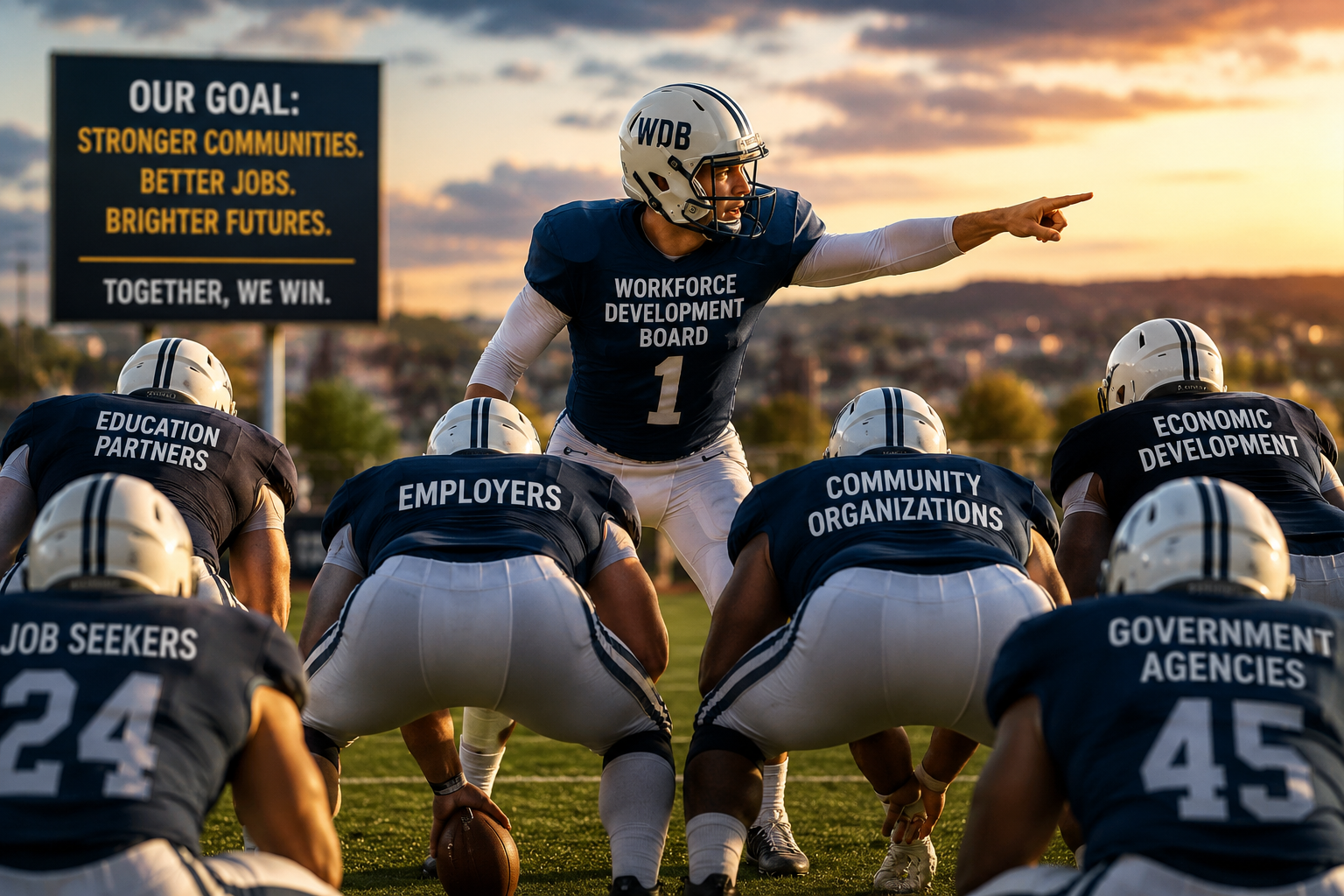
Think of a local workforce board as the quarterback of a team. The quarterback doesn't catch every pass or make every tackle, but they help everyone work together toward the same goal. In the same way, local workforce boards don't replace schools, colleges, employers, or job centers. Instead, they align these partners around a shared strategy, so the entire workforce system works better.
For job seekers, that might mean connecting someone who lost a job to career counseling, skills training, childcare assistance, transportation support, and ultimately a new career with family-sustaining wages. For a young person, it could mean discovering an apprenticeship that leads directly into a high-demand occupation. For a veteran or someone changing careers, it may mean translating existing skills into new opportunities.
For employers, local workforce boards are trusted partners that help solve talent challenges. They identify workforce shortages, connect businesses with qualified candidates, develop customized training programs, support apprenticeships, and help companies adapt as industries and technologies evolve. Rather than asking employers to navigate dozens of separate programs, local workforce boards bring the right partners together around one table.
The impact extends beyond individual jobs. When businesses can grow because they have skilled workers, communities become more competitive. Families become more financially secure. Young people see opportunities to build careers close to home. Employers invest with confidence because they know a strong talent pipeline exists.
Perhaps the most important thing local workforce boards do is build relationships. They connect organizations that might otherwise work independently and help them solve problems collectively. Whether responding to an economic downturn, helping a community recover after a disaster, preparing workers for emerging industries, or expanding access to opportunity, local workforce boards ensure that local solutions reflect local needs.
Most people never realize a local workforce board was behind the success story they hear about—a new training program, an expanding employer, or a neighbor who found a better career. That's because their greatest achievement isn't running every program. It's creating a workforce system where education, business, and community partners work together so people and employers can succeed.
At their core, local workforce boards exist for one simple reason: to ensure every community has the talent businesses need to thrive and every individual has a pathway to meaningful work. When those two goals come together, everyone benefits.